

If you’re on the hunt for a carport with storage or a carport with lean-to, you’re in good company. Many homeowners and businesses want both vehicle protection and secure room for tools, equipment, or workspace, but find that building a full garage or standalone shed can be costly. That’s where metal combo units shine: they blend open shelter with enclosed space in one integrated structure.
What Is a Metal Combo Unit?
A metal combo unit (sometimes called a carport-storage combo or combination building) is essentially a carport structure that has one or more enclosed sections—either on the sides, back, or as lean-tos—attached to the open covered area. Rather than being purely open like a traditional carport or fully enclosed like a garage, a combo unit gives you the best of both worlds.
Some of the most common forms include:
- Attached shed/enclosed module: One side (or both sides) has an enclosed space that can serve as a tool room, garden shed, workshop, or even small garage.
- Lean-to style: A storage section “leans” against the main carport roof, forming a sheltered overhang on one or both sides.
- Back-end storage bay: The rear portion of the carport is fully enclosed while the front remains open for parking.
- Partially open storage: In some designs, the “storage” space might be semi-open to allow easier access while still offering protection.
At Eagle Carports, the Metal Combo Units category includes models like the 14×30×8 Vertical Roof Metal Combo Unit, 20×30×9 Vertical Roof Metal Combo Unit, and 24×30×10 Metal Combo Unit, among others. These units can be customized in many ways—dimensions, roof style, wall panels, doors, window options, etc.
You can think of them as modular hybrid buildings: part carport, part enclosed building.
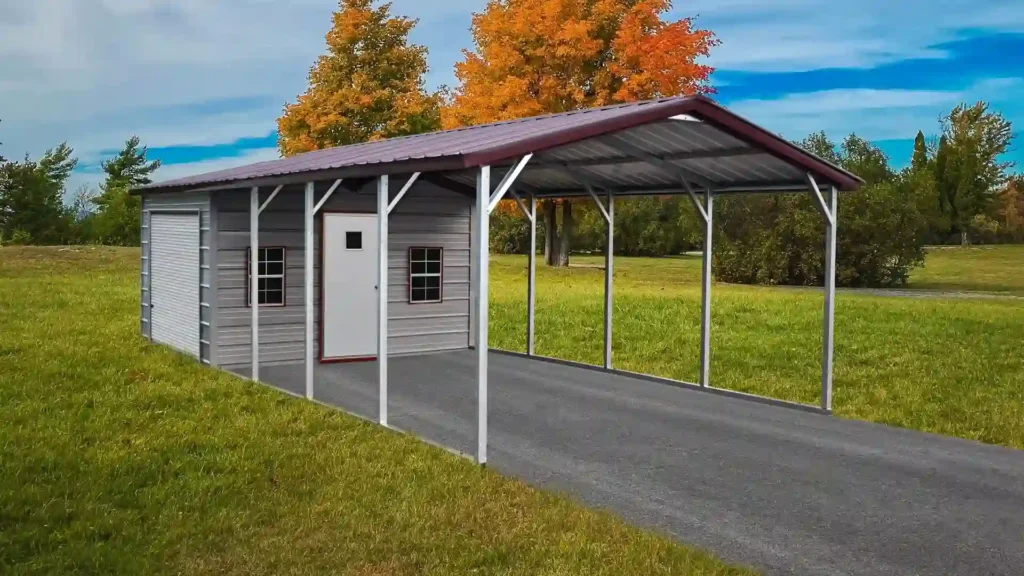
14x30x8 Vertical Roof Metal Combo Unit
The 14x30x8 Vertical Roof Metal Combo Unit is a versatile and durable storage solution, perfect for housing vehicles, equipment, and tools.
Why Choose a Combo (Carport + Storage) Instead of Separate Structures?
A metal carport with storage offers more than just shelter, it’s an efficient, space-saving, and customizable solution that fits a wide variety of needs. Instead of building a separate carport and storage shed, combining both functions in one integrated unit provides practical and financial advantages.
Cost Efficiency
One of the biggest benefits of a combo carport is its cost efficiency. Building a single structure that serves multiple purposes generally costs less than constructing two separate buildings.
You’re saving on materials, labor, and site preparation. A combo unit uses shared supports, a unified roof, and one foundation, which dramatically cuts expenses.
Plus, maintenance costs over time tend to be lower. You’ll only have one structure to maintain, repaint, or repair instead of two. This makes combo units especially appealing for anyone who wants a long-lasting, low-maintenance solution without paying a premium for a full garage.
Footprint Optimization
If you’re working with limited yard or property space, a carport with storage maximizes every square foot. By combining functions into a single structure, you save room that would otherwise be taken up by multiple standalone buildings.
Many combo units integrate enclosed storage at the back or along one side—what’s sometimes called a carport with lean-to—making excellent use of vertical and lateral space. This design allows you to keep vehicles sheltered while maintaining easy access to storage for lawn tools, power equipment, or recreational gear, all without cluttering your lot.
This compact layout is perfect for urban or suburban homeowners with limited acreage, or for anyone who simply wants more open yard space for landscaping, gardens, or future projects.
Convenient Access
With a single structure, you can move directly from your vehicle into your storage space, workshop, or utility area without ever stepping into the rain, snow, or summer heat.
That seamless connection is more than just comfortable—it’s also practical. You can quickly grab tools or supplies while loading your truck, or park your mower under cover right next to your shed after use.
Some designs even include walk-in doors between the open and enclosed sections, giving you protected, all-weather access. Whether you’re working on weekend projects or storing valuable equipment, that level of accessibility can make everyday use much smoother.
Better Protection
With a metal carport combo, both your vehicles and stored items benefit from superior protection. The open carport area keeps cars, trucks, and boats safe from sun exposure, hail, and heavy rain, while the enclosed portion shields your valuable tools, machinery, and supplies from wind, pests, and moisture.
This dual-protection design is particularly helpful in areas with unpredictable weather or high humidity. Instead of leaving your equipment in a shed that may be too small or too far from your main parking area, you can consolidate everything under one strong, durable steel structure.
And because Eagle Carports uses heavy-duty steel framing and weather-resistant roofing, you’re getting lasting peace of mind knowing everything inside and underneath is secure.
Flexibility and Future Expansion
Metal combo units are designed and built with flexibility top-of-mindmind. As your needs evolve, these structures can easily be reconfigured, expanded, or upgraded.
Need more enclosed storage in a few years? Add another wall section or lean-to. Want to convert part of your open carport into a workshop? Simply enclose one bay with wall panels and a roll-up door.
Unlike wood structures, metal combo units from Eagle Carports are modular and customizable, which means you can adapt your building to fit changing vehicles, growing storage needs, or new hobbies—without starting from scratch.
How to Pick the Right Carport With Storage Combo
Define Your Use Cases (and Prioritize)
Start by listing how you intend to use the combo unit. That might mean:
- Vehicle storage and protection (cars, trucks, RVs, boats)
- Equipment or tool storage (mowers, power tools, lawn gear)
- Workshop or hobby area (woodworking, mechanical work, crafts)
- Seasonal or overflow storage (holiday items, outdoor furniture, supplies)
By ranking these, you’ll know how much of the footprint should be open vs enclosed, what ceiling height you need, and where to place doors.
For instance, if vehicle storage is your top priority, you’ll want 60–70% of the floor area for the open carport portion and only a smaller enclosed portion for tools. But if workshop or equipment storage is equally important, you might go for a more balanced split.
Size & Dimensions
- Width and length: Think about how many vehicles or how much equipment you want under cover. For example, Eagle Carport’s 24×30×10 Metal Combo Unit gives you generous space for two vehicles and storage.
- Height and eave clearance: If you have tall trucks, RVs, or overhead storage inside, you’ll want higher clearance. Eagle Carport’s 24x45x13 Metal Combo Unit has plenty of clearance for even the tallest vehicle, for instance.
- Storage portion size: Decide how many square feet your enclosed section needs.
- Door openings: For the enclosed side, plan for larger roll-up garage doors or smaller walk-in doors . Many Eagle combo units include both options in their specs.
Roof Style & Drainage
The roof style you choose for your carport with storage plays a major role in both appearance and performance. Beyond simply giving your structure its visual character, the roof design impacts how well it handles rain, snow, and debris over time.
Vertical Roof
The vertical roof is the premium choice for durability and weather resistance. In this design, the panels run from the ridge down to the eave, allowing rain, snow, and debris to easily slide off. This minimizes the risk of leaks and water pooling, which can occur with horizontal panels. The vertical orientation also provides added structural strength—perfect for areas prone to heavy snow or high winds.
Boxed Eave (A-Frame) Roof
For those who prefer a more traditional residential look, the boxed eave, also known as the A-frame roof, offers a sleek appearance with clean lines and overhangs on the sides. It’s a great middle-ground option—more affordable than a vertical roof but with better water runoff and aesthetic appeal than a regular roof. The boxed eave style blends seamlessly with home architecture that has matching gables or sloped roofs, making it a popular choice for combo units placed close to a house or other buildings.
Regular (Curved) Roof
The regular roof—recognizable by its rounded edges and curved shape—is the most economical option. It uses horizontal panels that run from front to back, creating a smooth, cost-effective shelter that still provides dependable coverage. This design works well in areas with mild weather and minimal snow accumulation. While it doesn’t shed heavy precipitation as efficiently as vertical or A-frame styles, it’s a great fit for budget-conscious buyers looking for simple protection for vehicles, lawn equipment, or recreational gear.
Choosing the Right Roof for Your Climate
Your local weather conditions should guide your decision. In regions with heavy rain, snow, or falling debris, opt for a vertical roof to ensure easy drainage and reduced maintenance. In moderate climates where aesthetics and affordability matter most, an A-frame or regular roof can provide excellent value without compromising functionality.
Framing, Gauge & Structural Strength
The durability and longevity of your metal combo unit depend heavily on the quality of its framing and materials.
Frame Tubing Size and Material Strength
The strength of your unit starts with its frame. High-quality combo units use heavy-duty galvanized steel tubing, which resists rust and provides the best rigidity. Look for units that use robust tubing—such as 2.25" or 2.5" square steel—to ensure your structure can withstand harsh weather conditions. A strong frame also reduces movement and rattling during high winds, keeping your carport quieter and more stable.
Gauge of Steel and Coating Quality
The gauge of steel sheeting used on your carport affects its durability and resistance to impact. A 29-gauge panel, for example, strikes the perfect balance between strength and flexibility.
Just as important is the quality of the paint or coating. Eagle Carports uses Becker’s 20-year limited paint warranty, a premium coating that protects against corrosion and color fading for decades. This ensures your combo unit maintains both its integrity and curb appeal long after installation.
Wind and Snow Ratings / Engineering Specifications
If you live in an area with strong winds or frequent snow, make sure your combo unit is engineered to local load requirements. Eagle Carports provides engineered drawings that specify snow load and wind resistance ratings, which are crucial for securing building permits and ensuring safety. Proper engineering gives you confidence that your structure will perform well under pressure no matter the season.
Enclosure Features & Access
The enclosed section of your carport with storage is what makes it truly versatile, transforming a simple shelter into a multi-use building.
Door Types
Roll-up garage doors are ideal for vehicle access or large equipment, while walk-in doors make it easy to enter the enclosed space without opening the entire unit. Many of Eagle Carport’s combo units offer both, allowing you to customize door size and placement based on how you’ll use the space day-to-day.
Windows and Ventilation Options
If you plan to spend time working inside your enclosed area, don’t overlook natural light and airflow. Adding windows, vents, or skylight panels can make the interior brighter and more comfortable. Ventilation helps prevent condensation and keeps tools and materials dry, especially in humid climates.
Open vs. Semi-Closed Sides
While some owners prefer a fully enclosed storage area, others opt for semi-closed sides to allow for easier access and ventilation. For example, you might choose open fronts with enclosed backs and sides, or install partial panels for wind and sun protection without losing accessibility. The right configuration depends on your balance of security and convenience.
Interior Layout
Before installation, consider how you’ll organize your space. Plan for shelving, electrical outlets, and lighting if you intend to use it as a workshop. Ensure there’s enough clearance for large tools or machinery, and leave space for safe movement around stored items. Thoughtful layout design can help your combo unit function like a true extension of your home or garage.
Aesthetic / Matching Home Exterior
A metal combo unit isn’t just a functional investment—it’s also part of your property’s comfort and curb appeal.
When selecting colors, trims, and roof styles, consider how your combo unit will blend with nearby structures. Eagle Carports offers a wide selection of color combinations for panels, trim, and roofing, allowing you to match or accent your home’s exterior. For instance, you can choose a roof color that complements your shingles or siding for a cohesive, finished appearance.
Roofline also plays a key role in the look. An A-frame or boxed eave roof mirrors the classic look of residential homes, creating a seamless connection between your carport and main building. For rural or modern properties, a vertical roof offers a sleek, industrial look with practical benefits.
The goal is to strike a balance between form and function—selecting a design that enhances your home’s value while meeting your practical needs for protection and storage. With so many customization options, Eagle Carports makes it easy to build a combo unit that fits both your lifestyle and your property’s style.
Permit / Foundation / Site Considerations
Before installation, it’s important to plan your site properly and make sure your structure meets all local regulations. A little preparation up front can save you time, money, and potential compliance issues later.
Here’s what to consider when determining the right location, foundation, and details for your metal building:
Permits
In many areas, even small carports with storage require building permits or approval from local zoning authorities. Requirements can vary depending on your location, structure size, and intended use. Check with your city or county building department early in the process.
Eagle Carports provides engineered drawings for most units, which can help streamline the permit application. Having these plans ready can also reassure inspectors that your structure meets wind and snow load standards for your region.
Foundation and Footing Options
A solid foundation ensures your combo unit stays stable and weather-resistant over time. You have several options depending on your budget and use:
- Concrete slab: Offers the most stability and is ideal for workshops or fully enclosed combo units.
- Asphalt or pavement anchors: Great for carports or semi-permanent structures where you want durability without a full slab.
- Gravel pad: A cost-effective and flexible choice that provides good drainage and support for lighter installations.
Your choice will affect anchoring type and drainage performance, so it’s worth discussing with the installer before finalizing your order.
Site Slope and Drainage
Good drainage is essential for maintaining the longevity of your combo unit, reducing the risk of corrosion, moisture damage, and erosion around the base of your building. Choose a location with a slight natural slope to prevent water from pooling under or around the structure. If your site is flat, consider grading the area or adding gravel to direct runoff away from the foundation.
Clearances and Setbacks
Before construction begins, verify that your planned location complies with local setback requirements—the minimum distance a structure must be from property lines, fences, or other buildings. These regulations help ensure safety and accessibility, especially if emergency or maintenance work is needed.
Also check for utility easements or underground lines that could affect installation. Taking measurements in advance will help you avoid costly relocations or permit delays.
Warranty, Support & Build Quality
When investing in a carport with storage, you’re not just purchasing a structure—you’re making a long-term investment in the protection of your property. That’s why paying attention to the warranty coverage, manufacturer support, and overall build quality is so important. A high-quality combo unit should be engineered to withstand the elements, maintain its appearance over time, and provide dependable service for years.
Start by reviewing the warranties offered by the manufacturer. Eagle Carports, for instance, provides a 90-day workmanship warranty to cover any issues that might arise from installation or manufacturing defects. This ensures that your structure is built correctly from the start and gives you peace of mind knowing that the company stands behind its craftsmanship.
Beyond warranties, take the time to inspect the build quality of your carport with storage. Every detail matters, from the alignment of the steel panels to the sturdiness of the fasteners and the precision of the trim. High-quality assembly ensures your structure not only looks professional but also performs well under stress—whether from high winds, heavy rain, or snow. Look for tight-fitting joints, consistent panel seams, and smooth trim work that enhances both durability and curb appeal.
It’s also worth considering the level of customer support and service you’ll receive after the purchase. Reliable manufacturers like Eagle Carports offer assistance with customization, delivery, and installation, as well as responsive post-sale support. Should you ever need to replace a component, make an adjustment, or expand your existing unit, having access to a knowledgeable support team makes all the difference.
Tips & Common Pitfalls to Avoid
- Overbuilding vs underbuilding: Many buyers under-estimate their future needs. If budget allows, design a little extra enclosed space—you can always leave it empty initially.
- Neglecting access: Make sure your doors are placed for convenient access. A storage bay door on the far side that you rarely use is wasted functionality.
- Ignoring ventilation or insulation: Workshops or enclosed bays may need vents or insulation to avoid overheating or humidity buildup, especially in damp climates like Florida, Louisiana, Mississippi, and other coastal areas.
- Mismatched load ratings: Don’t pick a model unfit for your wind or snow climate just because it’s cheaper upfront. Eagle Carports provides you with the wind and snow rating for your specific location and will make sure you avoid this issue.
- Poor site prep and drainage: A puddled pad will damage your structure over time or cause foundation issues. Eagle Carports only uses trusted contractors to get a consistently great installation every time.
- Aesthetic mismatch: Skimping on trim or color matching can make the structure look out of place on your property, making you resent a major investment.
Finding the Right Carport and Storage with Eagle Carports
A carport with storage (or carport with lean-to) in the form of a metal combo unit is a flexible, cost-effective solution that brings shelter and utility together. By thoughtfully defining your priorities, sizing and designing smartly, and picking strong structural components, you can end up with a structure that serves you well for years.
If you’d like help narrowing down options or want a custom design, the team at Eagle Carports can walk you through specs, 3D modeling, and engineered drawings. Call us today to explore our models, or build something unique from the ground up.